Reconciliation in Education in NSW
We run the annual Schools Reconciliation Challenge
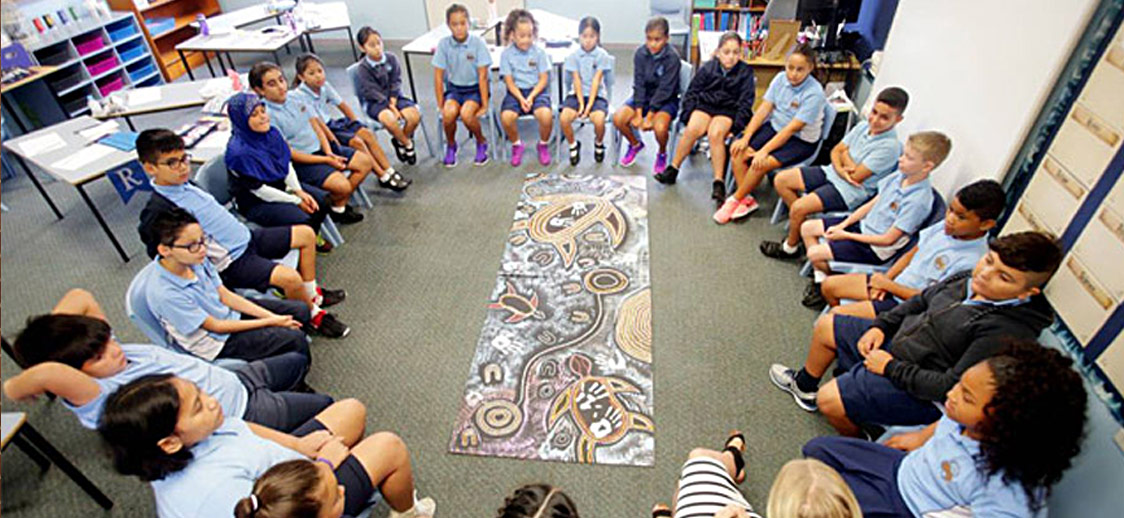
The Schools Reconciliation Challenge is an annual writing and art competition for young people across NSW and the ACT. The challenge meets the objectives of the K-6 and 7-10 syllabus.
Every year, we ask students to create artworks and stories inspired by a theme, and to reflect on what reconciliation means to them.
The pieces are submitted, culminating in exhibitions and regional tours throughout NSW.
You can access art and writing based classroom activities and resources, located on the Schools Reconciliation Challenge website.
Q&A: What is Reconciliation in Education?
It is important to recognise the relationship and distinctions between ‘Aboriginal education’ and ‘reconciliation in education.’ That is, as well as focusing on strategies/pedagogies for supporting Aboriginal and Torres Strait Islander students’ learning, strong approaches to reconciliation in education simultaneously focus on teaching all students and staff about the importance of reconciliation, and Aboriginal and Torres Strait Islander histories, cultures and contributions.
Focus Areas 1.4 and 2.4 of the Australian Professional Standards for Teachers identify what teachers need to know and be able to do in order to teach Aboriginal and Torres Strait Islander students and to teach all students about Aboriginal and Torres Strait Islander languages, history and culture.
Focus Area 1.4: Strategies for teaching Aboriginal & Torres Strait Islander students Focus Area 2.4: Understand and respect Aboriginal and Torres Strait Islander people to promote reconciliation between Indigenous and non-Indigenous Australians. These focus areas present a great opportunity for Australian teachers to engage in this important part of our shared national identity, however many teachers are unsure of how to meaningfully address them.
Our program provides NSW schools with a mechanism and resource to increase the capacity and confidence of teachers to embed Aboriginal and Torres Strait Islander perspectives in the classroom and implement reconciliation initiatives at the local level.
Q&A: Where does reconciliation fit in the Australian Curriculum?
Reconciliation is a critical and ongoing process with education being the key to positive change.
The Australian Curriculum sets expectations for what all Australian students should be taught, regardless of where they live in Australia or their background. Included in the Australian Curriculum are three cross-curriculum priorities, one of which is Aboriginal and Torres Strait Islander Histories and Cultures.
The Aboriginal and Torres Strait Islander Histories and Cultures priority provides the opportunity for all young Australians to gain a deeper understanding and appreciation of Aboriginal and Torres Strait Islander histories and cultures, knowledge traditions and holistic world views. This knowledge will enrich all learners’ ability to participate positively in Australia’s journey towards reconciliation through a deepening understanding and connection with the world’s oldest continuous living cultures.
We partner with Reconciliation Australia to deliver the National Reconciliation in Education Program in NSW
Reconciliation Australia’s Narragunnawali program supports all schools and early learning services in Australia to foster a high level of knowledge and pride in Aboriginal and Torres Strait Islander histories, cultures and contributions. The Narragunnawali online platform is free to access and provides practical ways to introduce meaningful reconciliation initiatives in the classroom, around the school and with the community. Through the Narragunnawali platform, schools and early learning services can develop a Reconciliation Action Plan (RAP), and teachers and educators can access professional leaning and curriculum resources to support the implementation of reconciliation initiatives.
“Thank you so much. I feel so supported
having access to these resources.” Webinar participant, Primary School Teacher.
What educators can do to contribute to reconciliation:
Read our latest educator e-news and sign up
Sign up to our educator e-news and get invitations to quarterly webinars and special educator events!
Download our Reconciliation in Education Kit
Reconciliation NSW invites your school or early learning service to progress reconciliation by engaging with our Reconciliation in Education Kit.
-
- Welcome
- What is the Schools Reconciliation Challenge?
- Reconciliation in Education reading and resource list
- Post card from the Future Classroom activity
- Introduction to Reconciliation Action Plans (RAPs) for schools and early learning services
- Narragunnawali Guide to Respectful and Inclusive Terminology
- Aboriginal Nations and Languages Map in NSW & ACT
- Welcome to Country and Acknowledgement of Country guide
- Aboriginal and Torres Strait Islander significant dates classroom poster
- The Five Dimensions of Reconciliation checklist poster
- Aboriginal Languages Factsheet
Check out our SRC website!
Explore the resources and register your school in the annual challenge to win prizes!
Read Alanna Raymond’s article on cultural competency:
Alanna Raymond is a proud Aboriginal Australian woman, primary teacher and member of Reconciliation Australia’s Narragunnawali team. Read her NSW Department of Education SCAN article (pg.9), Alanna explains cultural competency in the context of education, and suggests practical ways teachers and schools can build cultural competence.
Book online NESA accredited cultural competency training for your school
Reconciliation NSW partners with the ‘Centre for Cultural Competence Australia (CCCA)’ who offer easily accessible, cost effective cultural competency courses accredited by NESA.
Print these activities for kids
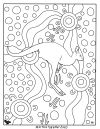
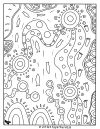
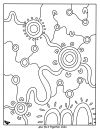
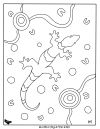
Our partners at Lendlease have shared these drawings for kids to colour by Kaanju artist Emma Hollingsworth.