
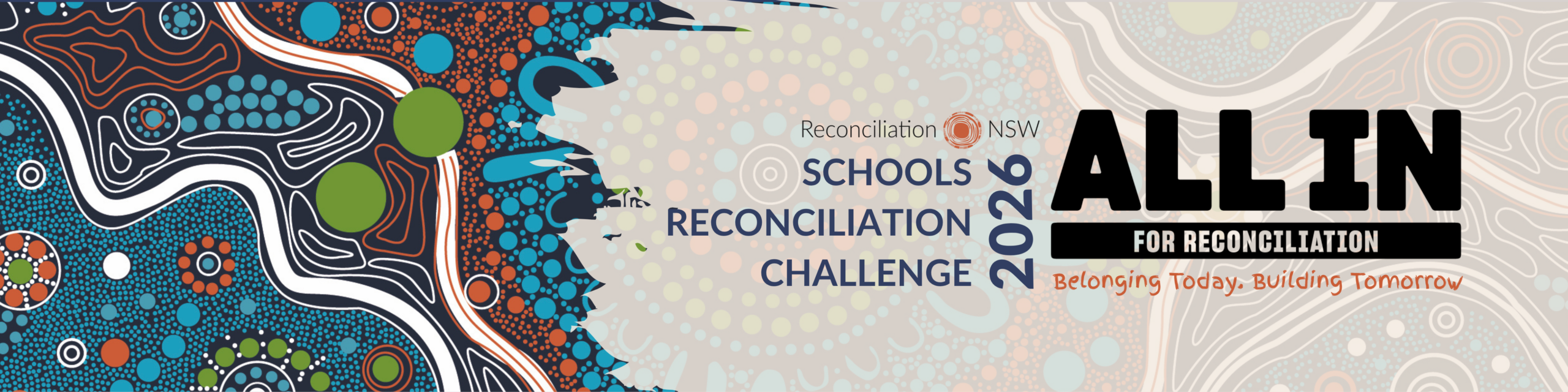
ALL IN for Reconciliation:
Belonging Today. Building Tomorrow
ALL IN for Reconciliation: Belonging Today. Building Tomorrow invites students to consider reconciliation not as a distant goal, but as a shared responsibility lived out in the present. Reconciliation grows when people feel that they truly belong — when their identities, cultures, and voices are respected, valued, and included. Belonging is not passive; it is created through action, courage, and collective commitment.
At its heart, this theme recognises that the future is being shaped right now. The choices we make in our classrooms, schools, and communities determine whether Australia becomes more inclusive, more just, and more united. Reconciliation is strengthened when individuals and communities are “all in” — when we move beyond words and actively contribute to fairness, understanding, and respect.
For First Nations peoples, belonging is deeply connected to Country, culture, community, and identity. True reconciliation honours this enduring connection while ensuring that Aboriginal and Torres Strait Islander voices are central in shaping the nation’s future. When we listen, learn, and act with integrity, we create spaces where everyone can stand strong in who they are.
This theme encourages students to reflect on their role as leaders and changemakers today. Young people hold extraordinary power to influence culture, challenge injustice, and build stronger communities. Through everyday acts of courage, empathy, and responsibility, they help shape a future grounded in shared respect and opportunity.
Belonging is built through relationships — through trust, inclusion, and a willingness to stand alongside one another. When communities commit to fairness and shared responsibility, reconciliation becomes a living practice rather than a single event. It becomes visible in how we treat each other, how we make decisions, and how we imagine our future together.
Through creative expression, storytelling, and bold visual thinking, students are invited to explore what it means to be truly “all in.” Their work can illuminate what belonging looks and feels like, challenge exclusion, and envision hopeful futures. In doing so, they remind us that reconciliation is not only about acknowledging the past — it is about building tomorrow, together.
Belonging starts today.
The future we build depends on the actions we take now.
We’re thrilled to announce we have our new content ready for you in partnership with Australians Together to bring you curriculum-aligned resources that support meaningful classroom learning inspired by this year’s Schools Reconciliation Challenge theme.
2026 Materials
Student Categories
What to submit:
Creative or persuasive written responses to the theme.
Possible formats include:
- Short stories
- Poetry
- Personal reflections
- Persuasive pieces
- Speeches
- Letters
- Hybrid creative forms
What judges are looking for:
- Clear connection to the theme
- Depth of thinking about belonging and reconciliation
- Original voice and creativity
- Emotional impact and clarity of message
What to submit:
Visual artworks responding to the theme.
Possible formats include:
- Painting
- Drawing
- Digital art
- Collage
- Mixed media
- Sculpture
What judges are looking for:
- Strong visual interpretation of the theme
- Symbolism and meaning
- Creativity and originality
- Technical effort appropriate to age level
- Clear artist statement explaining the idea
What to submit:
Short films or promotional-style videos showcasing reconciliation in action.
This may include:
- Student-led initiatives
- School reconciliation projects
- Interviews or storytelling
- Documentary-style pieces
- Call-to-action videos
Suggested length:
- 2–4 minutes
What judges are looking for:
- Authentic student voice
- Demonstrated impact or initiative
- Clear link to the theme
- Storytelling and structure
- Creativity and collaboration
Teacher Category
What to submit:
Reflections, case studies, or creative documentation of programs that foster belonging, inclusion, and reconciliation.
Formats include:
- Written/Video reflections
- Case studies
- Photo essays
- Visual documentation
Focus areas may include:
- Classroom programs that build belonging
- Culturally responsive teaching
- Community partnerships
- Student leadership initiatives
- School-wide reconciliation strategies
What judges are looking for:
- Clear impact on students
- Thoughtful reflection
- Innovation or strong practice
- Alignment with reconciliation principles
- Evidence of inclusion and belonging
Judging Information
Support the Schools Reconciliation Challenge
If you and your school would like to further support this important educational initiative, we invite you to contact us via schools@reconciliationnsw.org.au and we can discuss further.